Section 2 of this series dealt with passive and active attenuation and how they affect the total cancellation.
The focus of this session discusses the physical characteristics of headsets and their effect on performance.
We mentioned earlier in the discussion that reductions to passive attenuation are inherent in an active implementation. It turns out that there are several key acoustic design parameters for maximizing PASSIVE performance that work against having “Industry bests” in ANR performance and comfort. Let’s review in some detail two aspects of design that prove this point.
Ear Cavity Volume
This refers to the amount of open space that surrounds the ear. It’s formed by the interior dimensions of the dome and the size/shape of the ear seal. In most cases, the cavity is partially stuffed with some acoustic foam material to enhance attenuation at some specific frequencies. Cavity volume is one of several SIGNIFICANT variables in determining passive attenuation. If all else is equal (which it never seems to be!), increased cavity volume will provide increased passive attenuation. As objects are introduced into this space that take up volume and ‘occlude’ (block or interfere with) the open cavity acoustic space, passive attenuation suffers. That’s why passive headsets never attenuate as well as a straight hearing protector of a similar design. Along with some cabling, the headset has a large speaker right in the middle of each dome. With any of these dome modifications, the NRR will be reduced.
Now, to make a passive headset ACTIVE, we need to put a bunch of electronics and maybe an additional speaker into each cup. Far worse (acoustically speaking) is the need to isolate the ‘ear’ side of the ANR speaker from the back side of the ANR Speaker. This is a requirement so the ‘rebound’ sound waves from the ‘anti-noise’ speaker don’t reflect around and change the noise profile we’re trying to cancel.
Do You Understand This?
Recall from Section 1 of ANR 101 that the ‘anti-noise’ signal is generated by a speaker pushing forward and creating a sound wave. That wave meets with the existing ‘noise’ signal (originally picked up by the internal microphone) and the two add together to be zero (we hope!). When the diaphragm of the speaker putting out the ‘anti-noise’ signal goes backward (or rebounds) to re-set, an equal wave is generated going backward (into the back of the cup). If that 20+dB wave is allowed to leak around to the front of the cavity, it’s noise profile will get mixed with the actual noise and make the ANR system unusable. SO…this back cavity must be sealed from the front cavity.
In most headsets, that back cavity volume is easily 60% of the total available volume. When that is taken away from the total dome volume, the remaining space (closer to the ear) is smaller. This smaller ear-side cavity means reduced passive effectiveness. From an ANR design/performance standpoint, a smaller ear-side cavity volume is actually good…it makes cancellation and stability easier. Smaller cavity space (near the ear) allows for a more predictable acoustic environment and less total power requirements to achieve reasonable cancellation. The larger back cavity volumes also help with battery life by reducing back pressure on the speaker diaphragm. So ANR performance and efficiency all get better as the ear-side cavity is reduced.
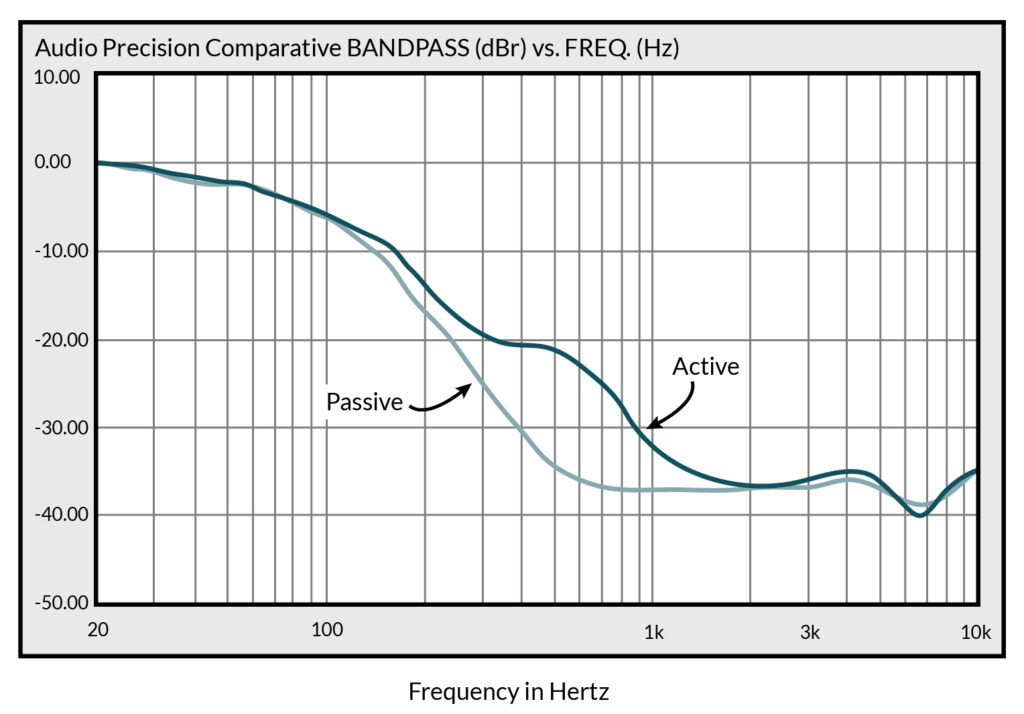
Unfortunately, the lost passive cavity space from back cavity isolation and additional ANR electronics causes a direct reduction to passive NRR performance. Note in the two graphs below the effects across the frequency spectrum. These graphs show passive reduction performance of identical platforms of active and passive headsets for two very different dome designs.
Platform #1
Platform #2
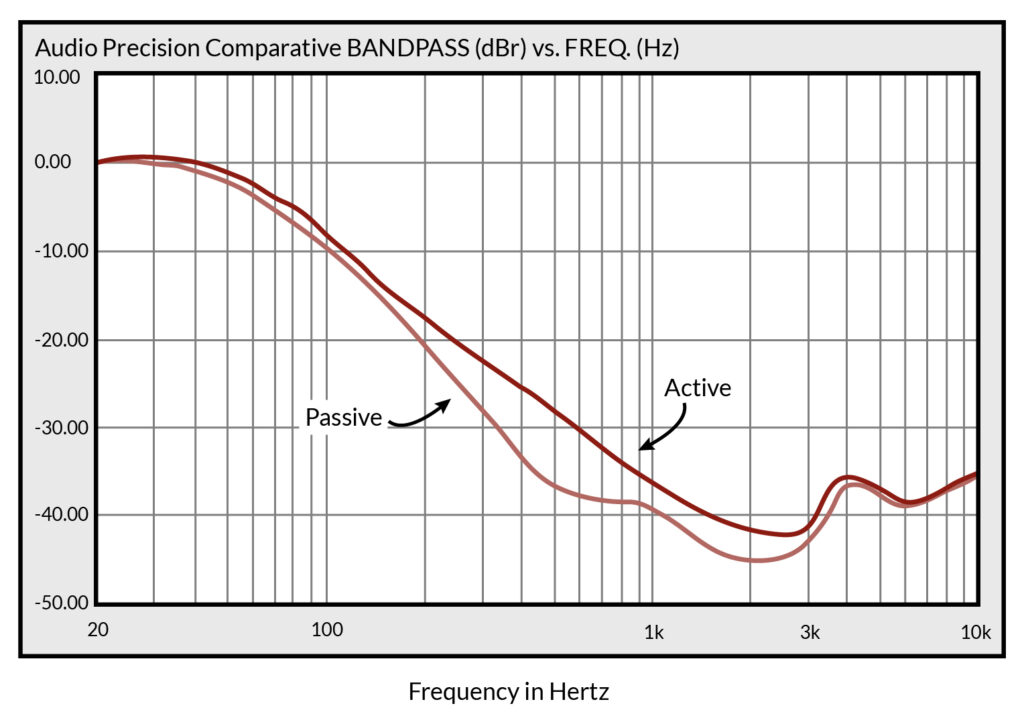
Notice the similarity in passive performance differences in the middle frequencies…from about 400 to 1000Hz. The passive implementations of each platform are quieter by 3-14 dB in that range over the performance of the active versions. Some of that difference is attributed to how the ANR module is designed and implemented. Careful attention to acoustic detail will protect more of the passive attenuating characteristics of the dome design.
Note also the difference in platform performance (both active and passive) between the two different styles of product.
Platform #1 vs. #2
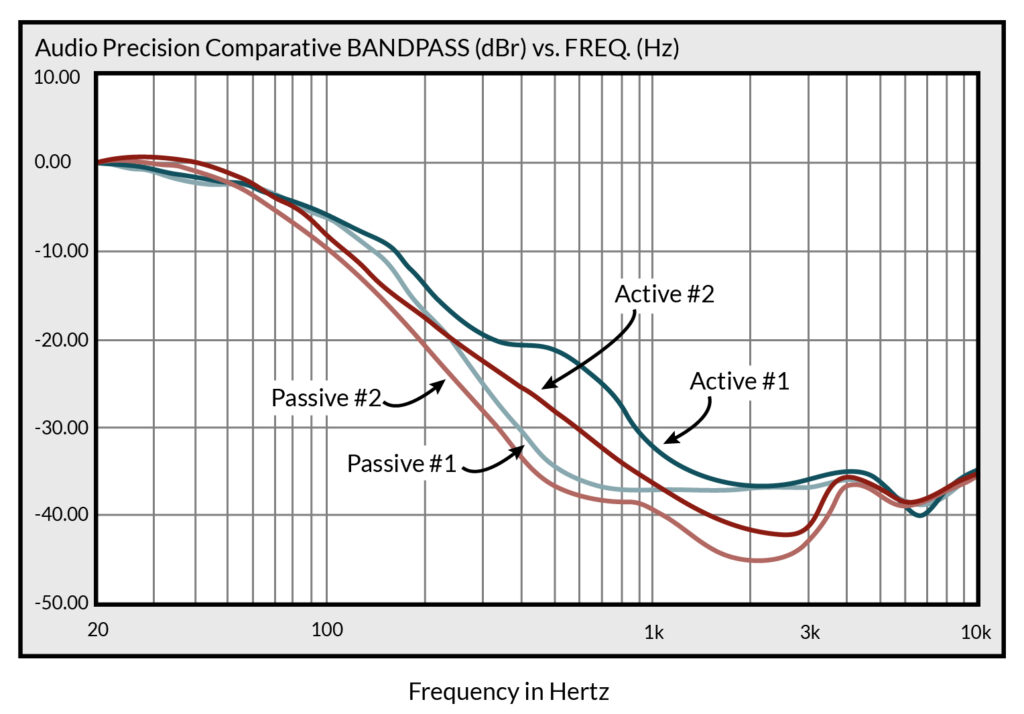
Platform #2 out performs #1 all frequencies…sometimes by as much as 6-8 dB. This is further proof that there are substantial differences in the way different platforms perform beyond just the active and passive design differences. Again, you have got to try them on and compare them to each other in a noisy environment to really know.
Ear Seal Design/Comfort
As a second example of design tradeoffs, consider the choices for ear seals and their effect on overall headset performance. The ANR designer needs to have a very good seal to insure a stable acoustic cavity for cancellation. As such, he would like to have an easily conforming material (and probably so would we) that compressed to a small acoustic cavity. If you refer to Section 4 of the ANR 101 series, we discussed various material selections and their effects on attenuation and comfort. Note that the material with the BEST attenuation properties is the WORST for conformability and side pressure requirements. An industrial designer (concerned with fit and comfort) would also point out that increasing the overall depth of the seal IMPROVES ear comfort with greater volume and overall internal size. Larger ear side cavity volume would tend to increase passive performance, but only if the ear seal construction is dense and relatively inflexible. (ouch!!) For comfort’s sake, the larger seals are typically constructed with foam that is not a very effective attenuator, offers no real gains (and sometimes losses!) in passive performance.
Design variables relating to the cup size, shape, and how it interfaces to your ears/head are the CENTRAL issues in the headset design and performance. If the design is optimized to be comfortable and effective acoustically, a passive attenuation tradeoff is often made in the ear seal design. A larger, more conforming seal makes for greater wearing comfort and fit with glasses. The ANR designer must also work harder to get good performance and stability in this larger space. As discussed earlier, the allocation of cavity volume effects not only passive attenuation and active performance and also issues like battery life. Large back cavity volumes improve battery efficiencies, but at the expense of ear-side volume and passive attenuation. All these tradeoffs need to be understood and planned into the product so the customer is clear about exactly what his headset is good at! It can’t be all things to all pilots.