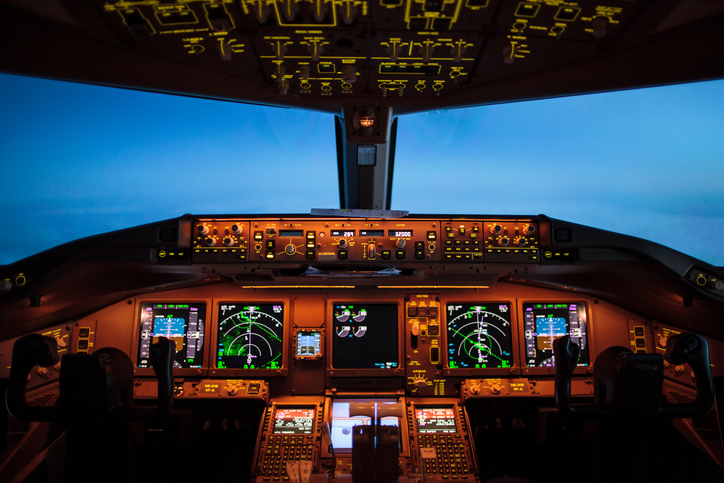
An aircraft cockpit is inherently a complex environment. A pilot constantly monitors aviation and navigation systems plus communications with ATC, other aircraft, or passengers. Factors such as flying a complex airspace, equipment problems, or weather conditions can add more complexity. Advances in aviation technology over recent decades have helped pilots, providing enhanced information, warnings, and aid in piloting. But technology has also reached the point where it can be a detriment to flying, complicating the pilot’s job past the point of safety. Fortunately, most GA pilots can choose what aids to bring into their cockpits. Even small factors can affect safety, especially in a critical situation, so pilots should consider the simplicity of a tech product when choosing aviation aids.
The dangers of complexity have been causing concern in the commercial aviation industry for years. The NTSB blamed the pilots in a 2013 crash in San Francisco, but also noted that “the complexity of the Boeing 777’s auto throttle and auto flight director—two of the plane’s key systems for controlling flight—contributed to the accident.” The fatal Boeing Max crashes of 2018 and 2019 pointed to the need for closer oversight of pilot training practices and aircraft safety certification, particularly for complex automated flight control systems. Yet an FAA study on safety certification concluded that some avionics systems today “should be considered too complex to assure safety.” If these systems are too complex for an army of regulators to assess, how is a pilot to cope? As one observer noted, “While technological complexity has increased exponentially, human capability has not.”
While most GA aircraft aren’t equipped with the same sophisticated avionics as commercial aircraft, flying is still more complicated than it used to be. Electronic Flight Instrument Systems, GPS, Terrain Awareness and Warning Systems (TAWS), Automatic Dependent Surveillance-Broadcast (ADS-B) systems, and electronic flight bags ALL give pilots a lot more and better information to work with. They also give pilots a lot more information to process, much of it in real time. So, pilots should think about complexity when adding yet another piece of technology—even safety technology—to the cockpit.
Carbon monoxide (CO) monitoring is a good illustration of how technology can make a pilot’s job simpler or more complex. The oldest, lowest-tech CO monitoring solution is a paper test strip: simple tech, but not particularly accurate, and the pilot has to remember to put one in the plane, change it every few months, and look at it during flight. Portable digital monitors are more accurate and effective at alerting a pilot to a problem, but the pilot still needs to remember to charge and carry them.
Brian Frost, Lightspeed’s Executive Vice President of Product Innovation and Quality, wanted to protect pilots from CO without adding to the workload in the cockpit. He says, “You can add a ridiculous amount of technology to the point that people can’t manage it. So, when I set out to design the Lightspeed Delta Zulu™ headset, it had to be simple. The CO monitoring is built into the aviation headset: there’s nothing separate to charge or remember to bring with you. You don’t need to monitor a test strip or readout; Lightspeed Delta Zulu gives you the info when you need it, and it tells you when something is critical. If a low level of CO is normal in your aircraft, you can change the alert level through the app, so it doesn’t bother you with nuisance alerts. But you can still capture CO levels in flight and review it after to check for developing problems.”
When you’re choosing a new device, app, or other tech product for your cockpit, here are some questions to consider:
- Is it accurate, reliable, durable, and easy to use?
- Do I have to remember to charge it, maintain it, and/or take it along?
- Is it one more thing to think about in the cockpit or will it fit smoothly into my normal flight processes?
- Do the benefits outweigh the efforts involved?
When it comes to aviation, more technology isn’t always better, and it can be worse. Our Lightspeed team talks to a lot of pilots, and as Brian says, “Pilots don’t like tech for the sake of tech. It has to offer a practical solution to a problem. In general, people are less interested in random tech gimmicks and more interested in things that simplify what they’re doing in the cockpit so that they can get out and enjoy flying.”
So, when choosing tech for your own use, ask yourself how it will simplify and enhance your flying experience. After all, you became a pilot for the magnificent views out of the cockpit window – not for complex screens on the devices around you.